
Liquid oak extract for spirits
You can’t control everything
But if you can control one thing, let it be your oak.
Things in lifeHow much control you have
- The weatherBarely any
- TrafficNot much
- Your flight leaving on timeBarely any
- Your mother-in-law’s opinionNone, really
- Your oakA lot more
Some things you don’t want to leave to chance.
You can’t control the weather. You can’t control traffic. You can’t control whether your flight leaves on time. And if you’ve been married long enough, you’ve probably accepted that you can’t control your mother-in-law’s opinion either.
There are plenty of things in life that are simply out of your hands. You learn to plan around them, work with them and, occasionally, just accept that they’re going to happen whether you like it or not.
But when you’re making spirits, there are some things you probably don’t want to leave entirely to chance.
Oak is one of them.
Inside the barrel
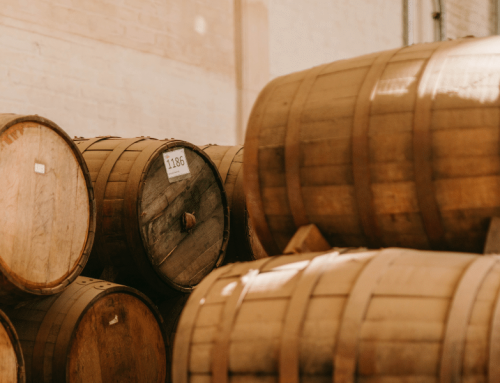
There’s a lot happening inside a barrel
Put a spirit into a barrel and, for a while, your job is mostly to wait.
But that doesn’t mean nothing is happening.
The spirit is interacting with the oak. Colour develops. Aromas and flavours change. The character of the spirit evolves over time. It’s one of the things that makes maturation so fascinating — and one of the reasons it can be so difficult to predict exactly what you’ll get at the other end.
Because there are a lot of variables involved.
No two barrels are exactly the same. Even barrels made to the same specifications can behave differently once they’re filled. What was previously in the barrel, how it was toasted, how many times it has been used and how it has been stored can all influence what it gives back to the spirit.
Then there’s the spirit itself.
Different spirits, different batches and different strengths can all interact with oak differently. Add temperature, humidity and time to the equation, and suddenly there’s quite a lot going on.
Variables in play
And, of course, there’s the angel’s share. Some of your spirit is going to disappear along the way. That’s part of traditional maturation, but from a production point of view, it still represents product lost.
None of this means traditional oak ageing is a bad thing. Far from it. It’s an important part of spirit production and, for many producers, an essential part of creating the character they’re looking for.
But it does mean that there are a lot of things happening in that barrel that you can’t completely control.
So, what can you control?
Meet WLT 150
More control over your oak
WLT150
- What
- Liquid oak extract
- For
- Spirit production
- Adds
- Oak-derived colour, aroma and flavour
- Use in
- Blending, finishing and profile adjustment
That’s where WLT 150 comes in.
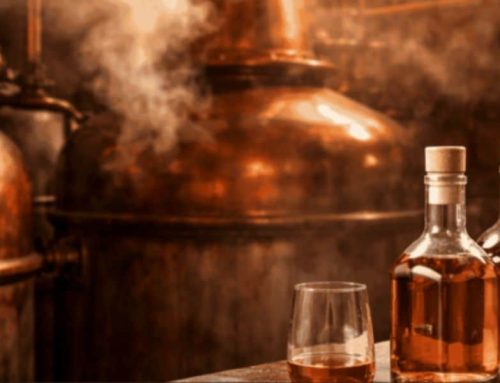
WLT 150 is a liquid oak extract designed for use in spirit production. It gives distillers a controlled way to introduce oak-derived colour, aroma and flavour to a spirit, whether you’re blending, finishing or adjusting the profile of a spirit that’s already well on its way.
Instead of relying entirely on additional time in a barrel and hoping that it takes the spirit exactly where you want it to go, WLT 150 gives you another way to make an adjustment when you know what you’re trying to achieve.
And there are plenty of situations where that can be useful.
Where WLT 150 earns its place
Four situations
Consistency
When consistency matters
Anyone who has worked with multiple barrels knows that getting the same result every time isn’t always as straightforward as it sounds.
You can start with barrels that look the same on paper and still end up with differences in the finished spirit.
WLT 150 can be used to help bring batches closer to a target profile, giving producers another way to manage variation and work towards a more consistent finished product.
时间
When time matters
Sometimes the spirit is close.
You don’t necessarily want to put it back into a barrel for another six months just to make a relatively small adjustment to the oak profile.
WLT 150 can be used to introduce oak character without relying entirely on additional time in barrel, giving producers another way to work towards the finished profile they’re after.
效率
When the numbers matter
Maturation takes time, space and working capital.
The longer spirit sits in a barrel, the longer that stock is tied up. Barrel capacity is occupied for longer. And, all the while, the angel’s share continues to do what it does best.
Using WLT 150 as part of a maturation, blending or finishing strategy gives producers another way to manage oak while making more efficient use of their spirit and barrel capacity.
Final touches
When the blend is almost there
And sometimes, you don’t need to change very much at all.
The spirit is good. The blend is good. It’s just not quite where you want it to be.
Maybe it needs a little more oak. A little more colour. A little more character.
WLT 150 can be used during blending and finishing to make those final adjustments and help bring the spirit closer to the profile you’re looking for.
The bottom line
Control what you can
There will always be things you can’t control.
- The weather
- The traffic
- Flight delays
- Your mother-in-law
That’s life.
But when it comes to your oak, you can have more control.
WLT 150. More control. Less compromise.


 简体中文
 English
 Español
 日本語
 Русский
 香港中文
 Italiano
 Français
 Nederlands
 Deutsch
 Português
 Ελληνικά